
Extracting a Complete Soil Core
Visualizations are concepts only, not mechanical diagrams
What is Core Completeness
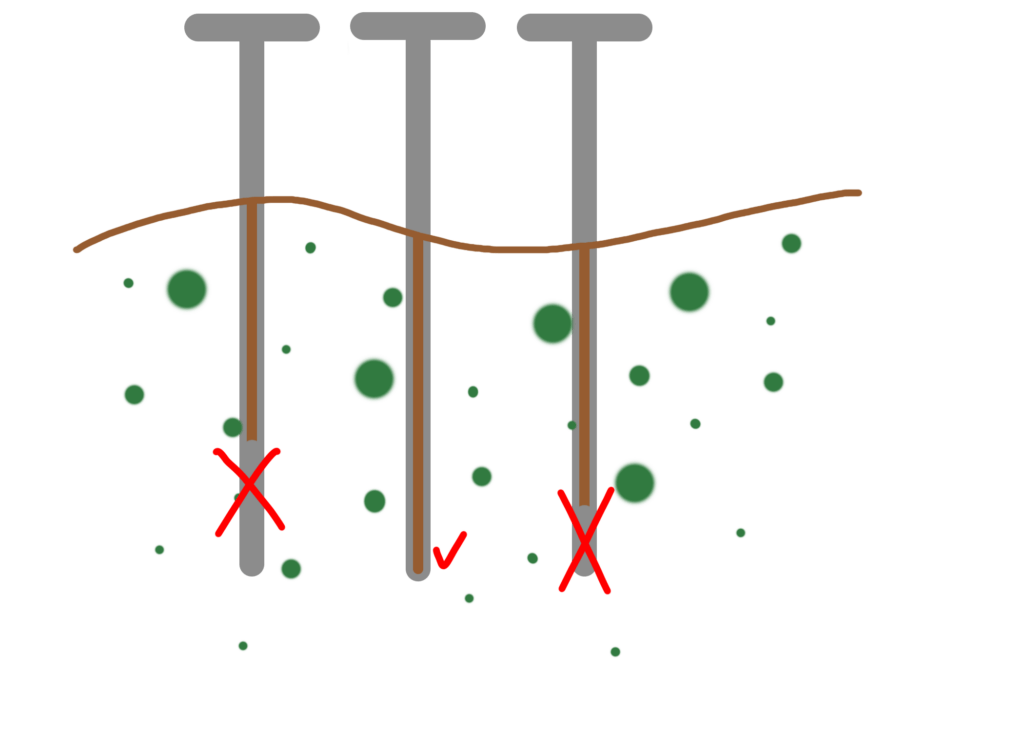
Getting an accurate soil core every single time means going to the right depth, and extracting that depth completely (this matters because of nutrient stratification). Just because you go to the right depth doesn’t mean you extract it fully and that’s because of three primary problems: #1 Getting soil into the probe, #2 Getting the soil up and out of the ground, and #3 Getting the soil out of the probe and into the bucket.
Getting Soil Into the Probe
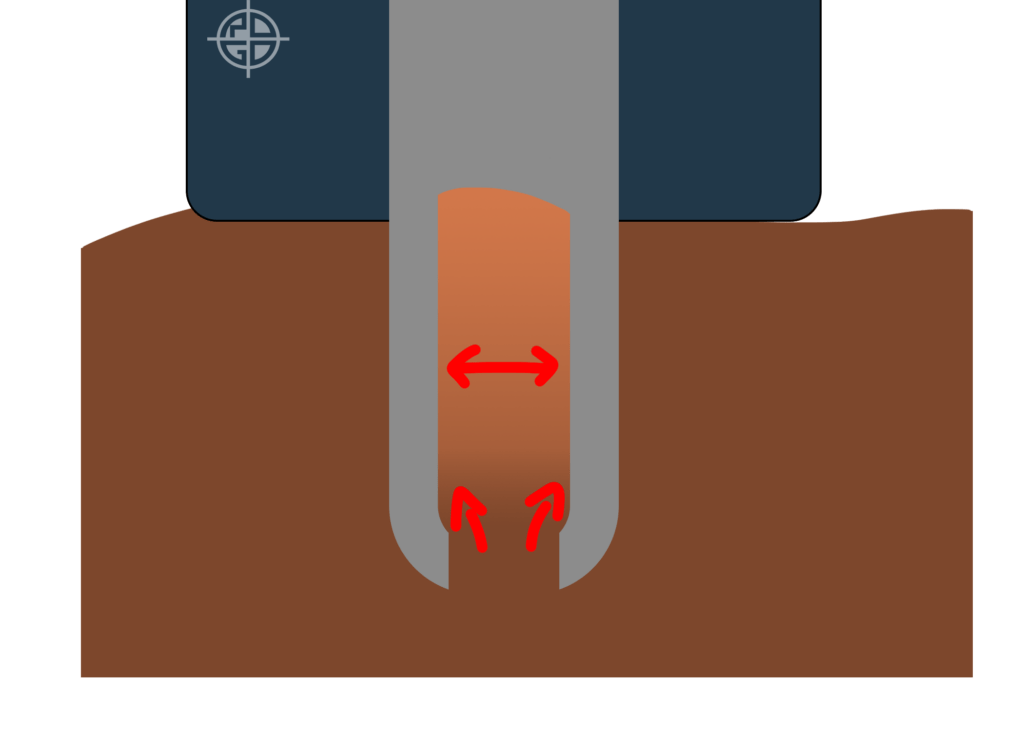
Let’s talk about into the probe first. Whenever soil sees the face of a probe it has a decision to make – do I go into the probe, or do I go around the probe. It makes that decision based on whatever path is easiest.
Two things that we do at ROGO to make sure that it’s always easiest to travel into the probe is:
- Use have a very smooth inlet, and
- Have lots of interior relief inside of here so that as soil moves up in the probe it has lots of breathing room to expand and not grab the sides and create back pressure that doesn’t allow soil into the probe
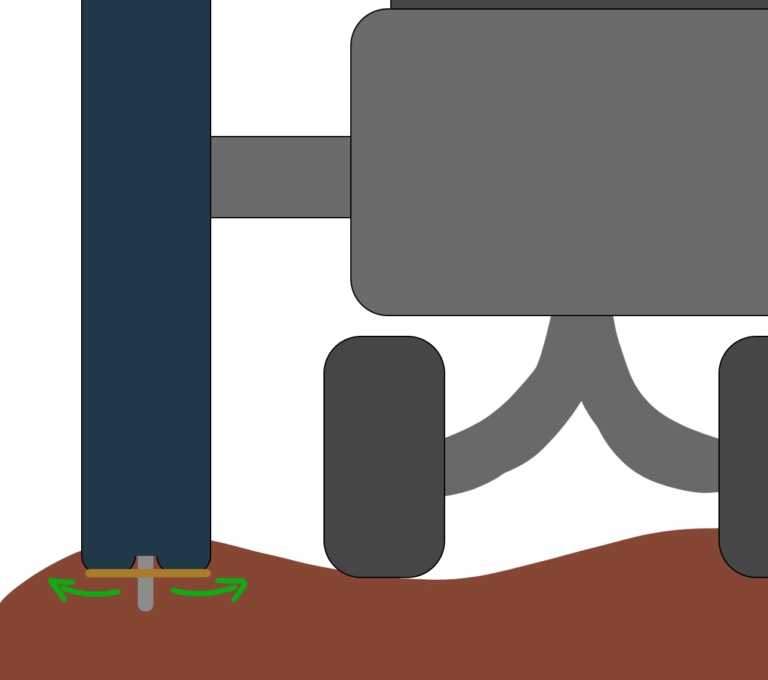
Then we have the issue of residue. If a hand probe was being used you could simply move the crop residue out of the way with your foot, but with a machine mounted system if you simply push a probe into the ground into crop residue it’s going to act like a wrapper and prevent soil from getting into the probe.
So at ROGO we use our bucket to pinch that residue very tightly against the ground and hold it very taut. This means that when we lower the probe it pierces the residue, getting the soil into the probe uninterrupted.
Up & Out: Extracting the Core
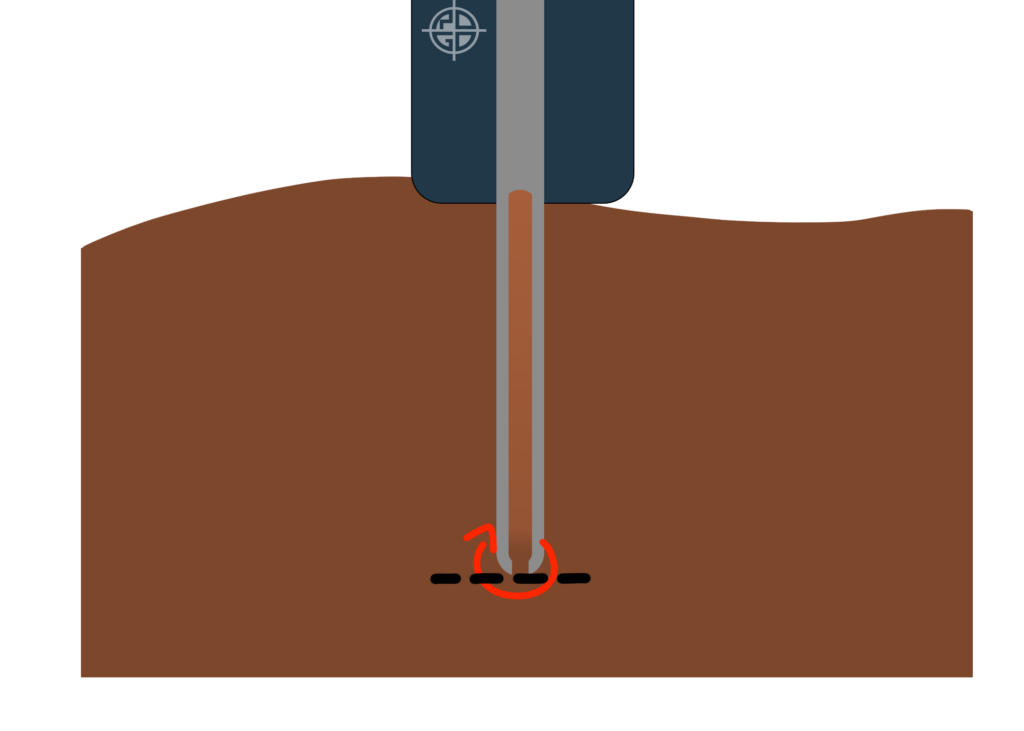
Next, once we’re at the bottom of the hole we need to get that soil up and out. The first part of that is making sure we sever the soil column from itself. We do that by rotating. Then, because of the interior relief and narrower inlet, we have a nice seat for that soil to sit on as the probe goes up
Dumping the Core into the Bucket
Once we get the soil up and out of the ground, we need to make sure that we do two things: scrape the soil into the bucket, and we also need to make sure that soil stays in the bucket.
Let’s talk about scraping it into the bucket. So as there’s soil in the probe, we’ve designed our scraper specifically to make sure that no soil gets past the scraper (which would inhibit the next so core being taken) and also that all the soil gets ejected into the bucket. That’s done with a specifically designed scraper.
The second part is we need to keep it in the bucket, and we do that with a trapdoor. The trapdoor solves two problems. One, as soil is collected and builds up in the bucket, it prevents that soil from falling back in the hole once the probe is pulled up. Secondly, it also prevents the soil in the tip of the probe, getting scraped out at the very end of the scraping motion, from falling down the hole as well. It does this by springing back very quickly and sealing off the bucket hole.
That’s how we get soil into the bucket and keep it in the bucket.
Conclusion
All in all, we get soil into the probe, we get it up and out of the ground, we get the core into the bucket, and we keep it in the bucket. That is how ROGO takes a complete soil core every single time.
ROGO Extracts A Complete Soil Core Every Time
The Problem:
Just because the probe reaches the right depth doesn’t mean it extracts the full depth of a soil core.
Getting Soil Into the Probe
ROGO’s probe has a smooth inlet and plenty of interior relief, making sure the probe fills properly every time.
Our bucket pinches crop residue, allowing the probe to pierce it.
Getting Soil Up and Out
To separate the core from the soil, we rotate the probe. As it rotates, the inlet provides a “seat” for the core to ride up and out of the ground.
Getting Soil Into the Bucket
We use a special scraper to get all the soil out of the probe and into the bucket.
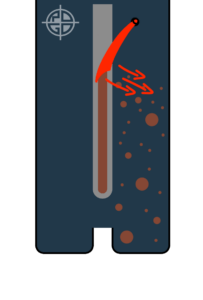
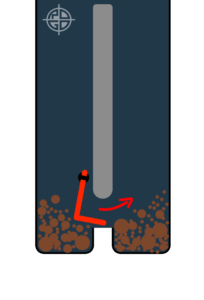
A trapdoor closes after the probe leaves the soil. This keeps 100% of the core in the bucket.
ROGO extracts the complete depth of every soil core by getting the soil into the probe, up and out of the ground, and into the bucket.